Monthly Archives: February 2010

Abaya regulations

It’s true, abayas are regulated and policed. And I don’t only mean the PVPV trolling the malls shouting at women to cover. For a Saudi woman that’s minor when compared to what we have to go through at schools and colleges. You can gauge the political stance of the administration of an educational facility by its abaya rules.

All schools that are run by the ministry of education, i.e. public schools, make female students and employees wear abayas tent style over their heads. Students in particular have to wear complete face covering that has no opening for the eyes. This is implemented by teachers, usually in pairs, that stand at the inside of the school entrance and not allow a student to go out unless she has the proper abaya and face cover on. This is also done at small women-only colleges and at Al Imam University, except instead of a rotation of gate duty between teachers, they actually employ a few women whose sole job is to police students to make sure that they wear a tent-style abaya with full face covering, wear long skirts and sleeves underneath and confiscate camera cell phones.

Many but not all private schools, colleges and the relatively more liberal King Saud University do not subject their female students to such scrutiny. As long as you wear a abaya and have a scarf on your head, you’re fine. And as long as you’re not actually pointing your cell phone camera and taking pictures, no one cares whether or not you have one. Unfortunately this flexibility is rare since the majority of Saudi women do attend public schools or at least the more conservative private schools.

I have had a lot of experience with this type of policing throughout my education and work career. Although I have not attended public schools as a student, I did work in a few as part of my practical training and also at the beginning of my teaching career. Of course I had to wear the tent style abaya too. But my way to get around it was to wear my regular shoulder abaya underneath and as soon as I was past the guards, I would shed the top abaya like it was on fire. I also had to do my share of gate duty and felt like a hypocrite. However it helped that I did happen across the principal at a restaurant with her face uncovered and wearing a fancy abaya. So many of us are enforcing rules that we don’t believe in.

What is underneath the abaya is also regulated. The first school I taught at the principal had an issue with my sneakers. She deemed them too western and ordered me to wear “regular” shoes such as loafers or high heels! At another school, at the first meeting the principal told me that she would let it go because it was my first day but my elbow long sleeves were against the rules. But nothing breaks the rules like a pair of pants on a Saudi woman. One time I was going for an interview at a university here in Riyadh. As I wasn’t a student and I had no intention of taking off my abaya for the interview, I went wearing pants. I knew the rules but since I was neither an employee nor a student there plus my abaya was the sort that did not have an opening in the front, I thought it would be ok. As soon as the female guard saw the cuffs of my pants under the abaya, she stopped me and told me that I could not enter the university until I bought a skirt from her and gave her my pants for safekeeping. She was serious! And she had a stack of 30 riyal black long skirts in a drawer. I did not want to miss the interview so I compromised (with a lot of back and forth arguing) by wearing one of her skirts on top of my pants with the abaya still on. Call me petty but as soon as I got past her I took the skirt off and stuffed into my purse.

My point is that Saudi women are conditioned from fourth grade and up, even as professionals themselves, to be subjected to this type of moral policing. Imagine what it’s like for women from ultra-conservative families. At home, school and work they are made to wear the abaya in such a way as to maximize the ideology that women are objects to be enjoyed by their guardians and covered from others. No wonder they impose it on themselves and on their daughters; it’s all they’ve known throughout their lives.

66 Comments

Filed under Culture, Gender Apartheid

Al Tahlia on Thursdays

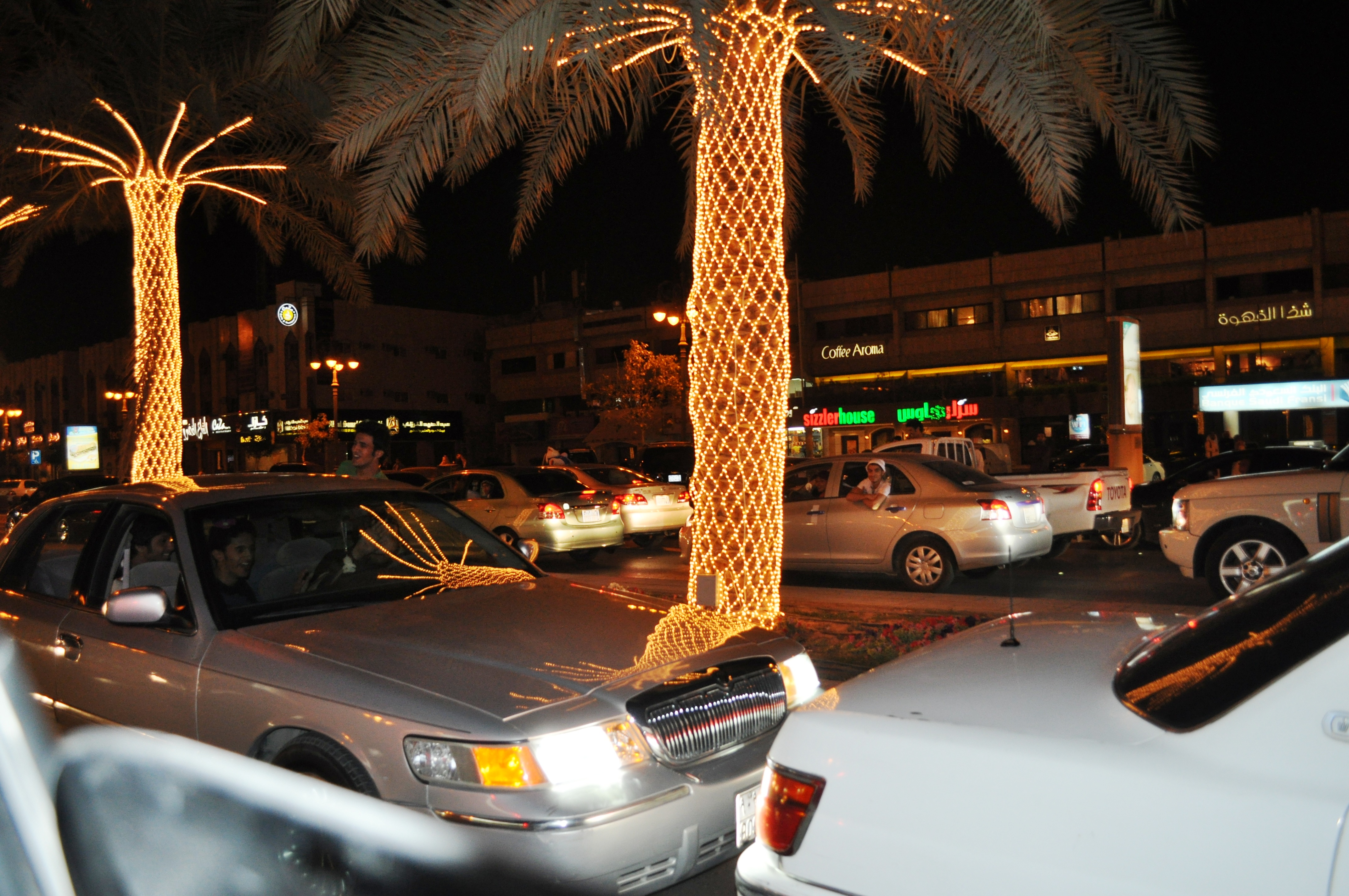
Al Tahlia is a street in the middle of Riyadh, lined on both sides with restaurants, coffee shops and a few boutiques and specialty shops. Last Thursday, February 11th, I went out to dinner with my sisters and afterwards, we decided to pass by Al Tahlia because we heard it gets crazy every Thursday. Our Thursdays are like Saturdays for the West. It’s the first day of the weekend. So my sister Fatten and I wanted to check it out especially since I had my camera handy and we weren’t disappointed. Keep in my mind that:

1-     Alcohol is illegal and inaccessible to the majority.

2-     These photos were all taken after midnight.

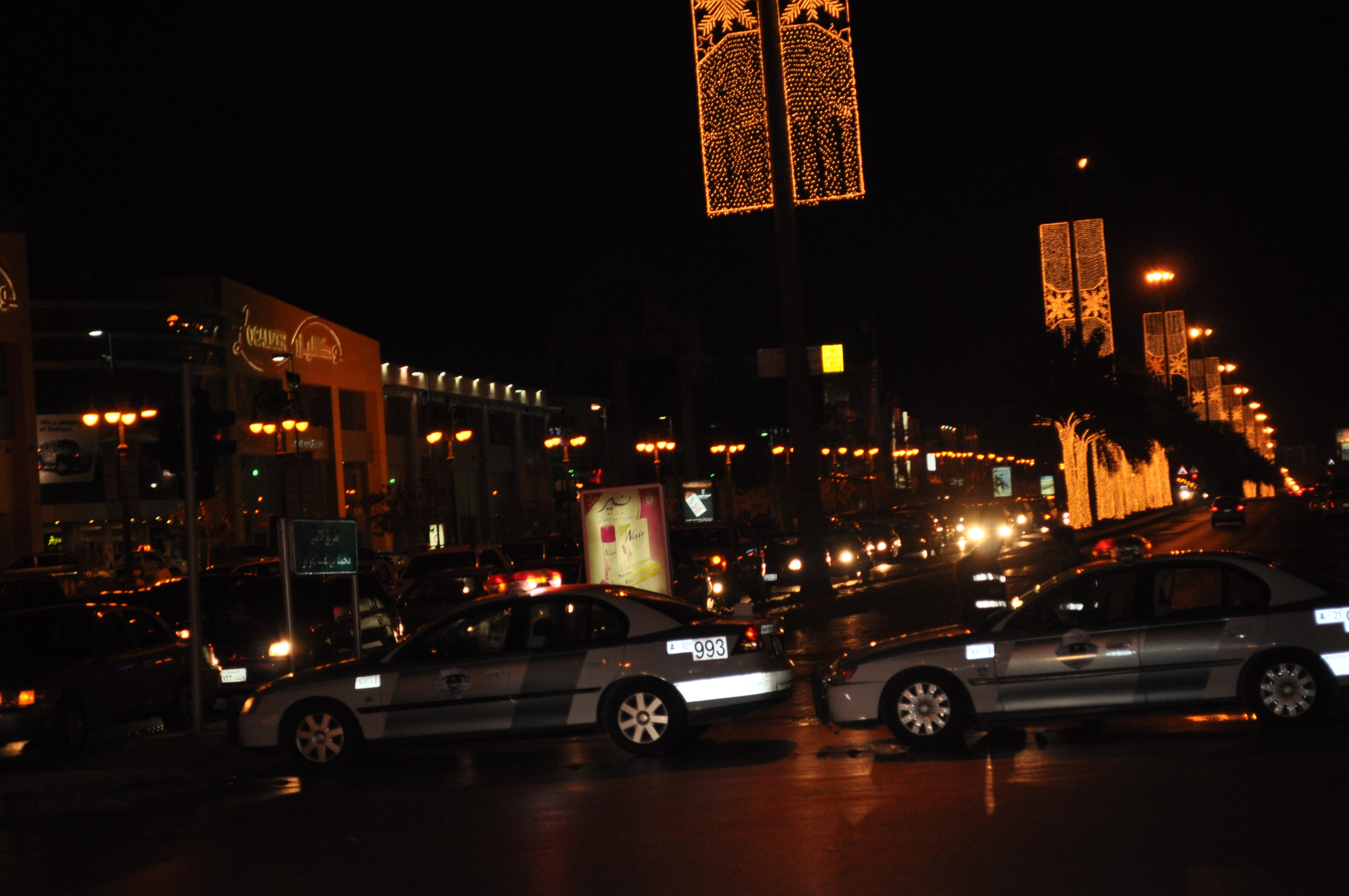
This one is just to show how crowded it really was. And those lighted poles on the left are palm trees with their trunks decorated with tiny yellow lights

And the police were out too. In full force, they had a bus parked onto one side and you can see police cars and police on foot bringing young men to the bus.

Here you can see men being led to the bus.

But that didn’t stop people (men actually) from making a ruckus, pointlessly hanging out of the windows of their cars and playing their music loud.

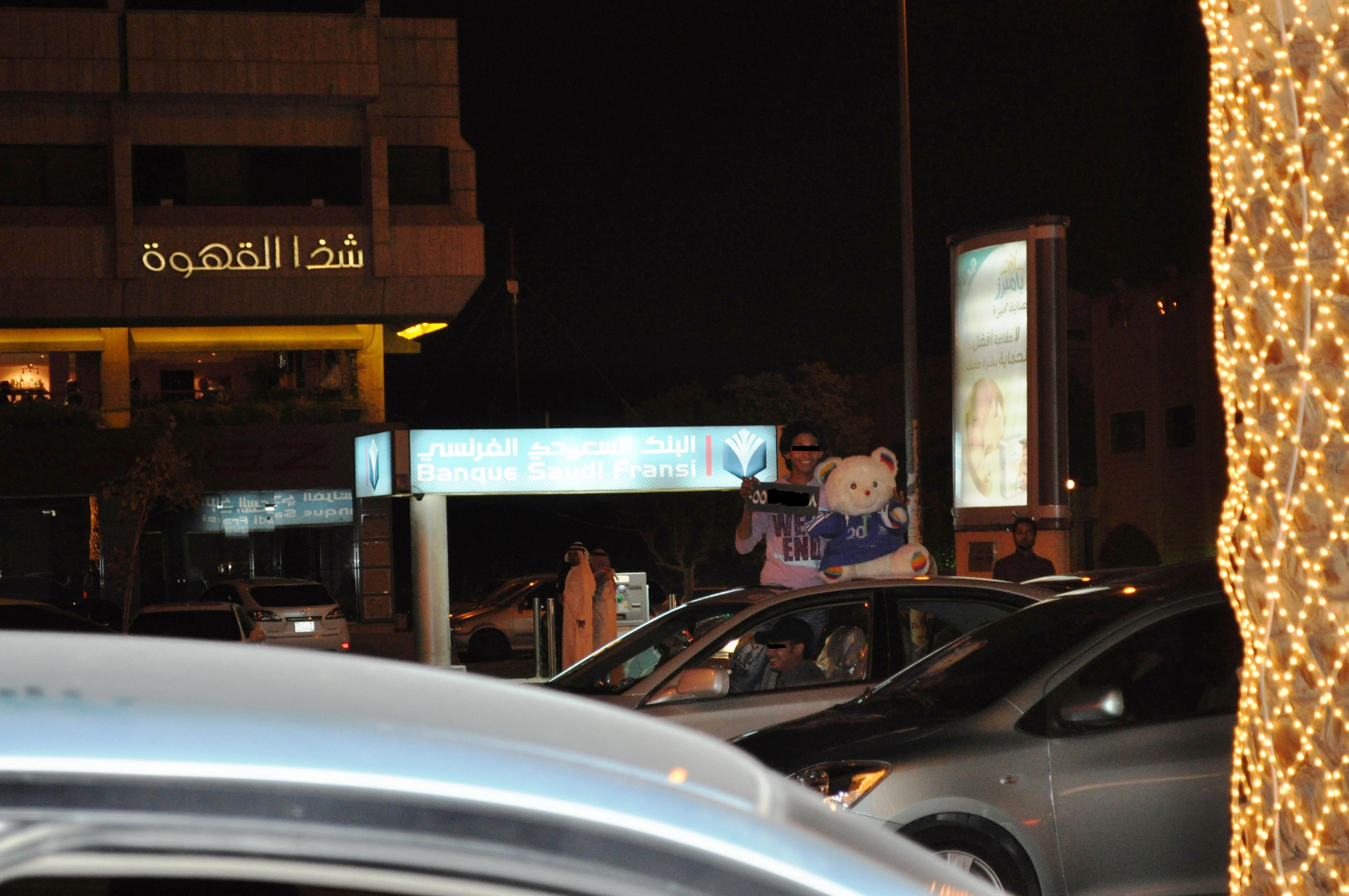
When they saw me with my camera they started to call out to me to take their picture. This one guy was especially persistent, that even the driver told me to take his photo! When he got the camera pointed at him he went back down into the car to get a sign on which he had painted his cell phone number. I blacked out his eyes and his number.

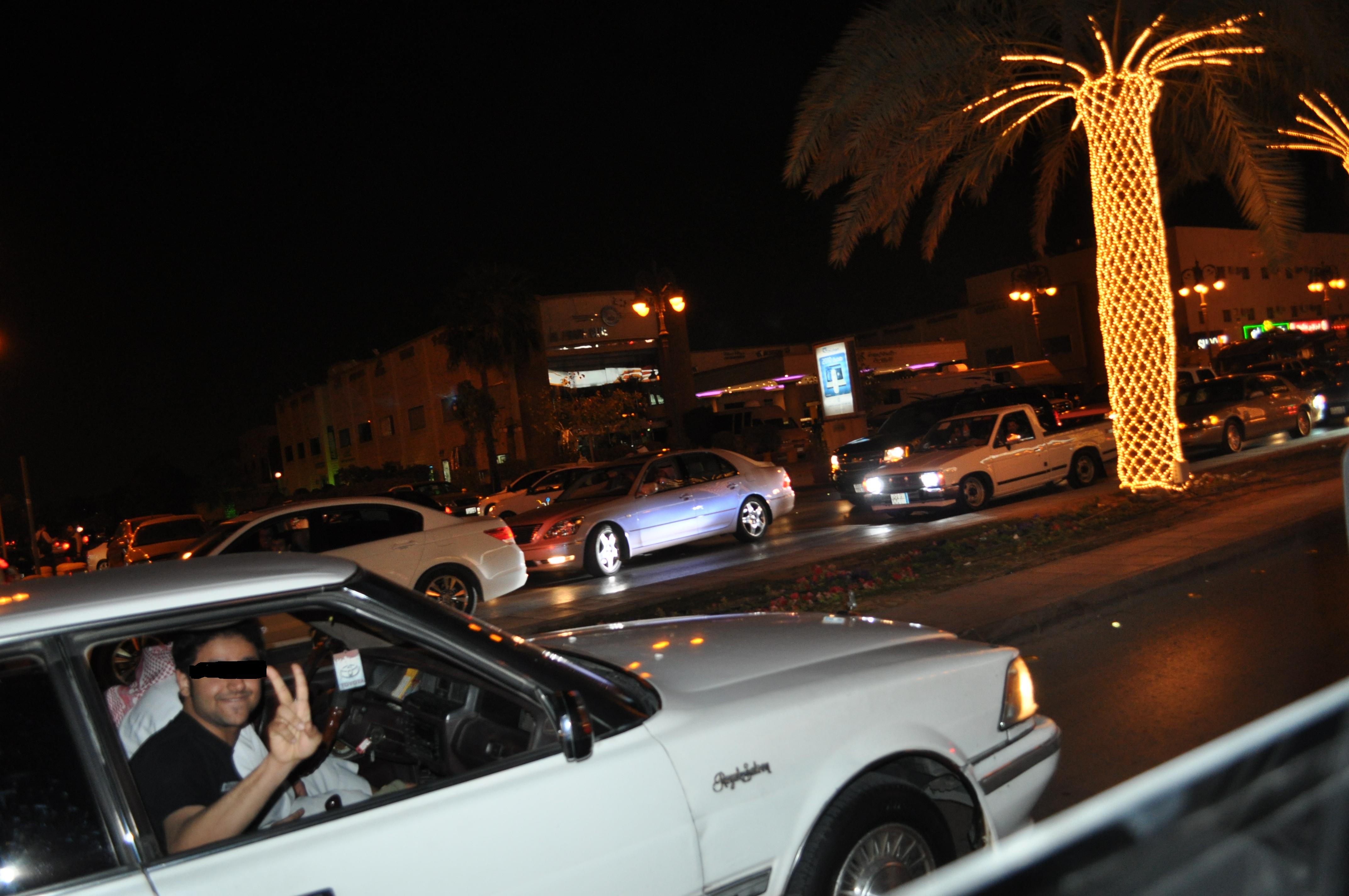
All over the street, they wanted to get their picture taken and posed for the camera. At one stop light a car full of kids actually ignored the red light so that they could get into the camera’s field of view. Some would even drive up to our windows to get a picture taken.

And it wasn’t only cars. motorcycles were aplenty. These guys didn’t mind having their photo taken as long as I gave them time to cover their faces with bandannas and scarves.

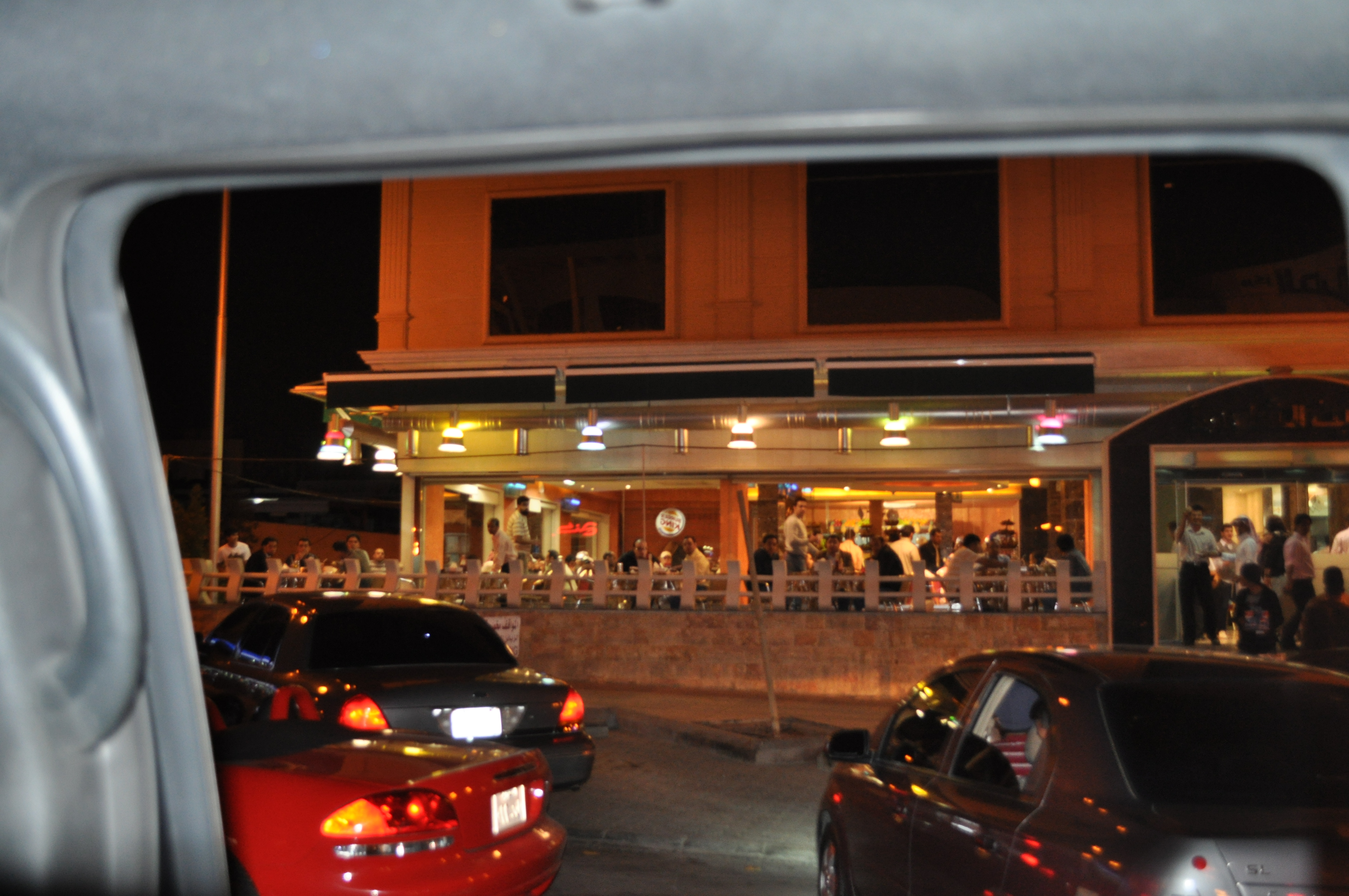
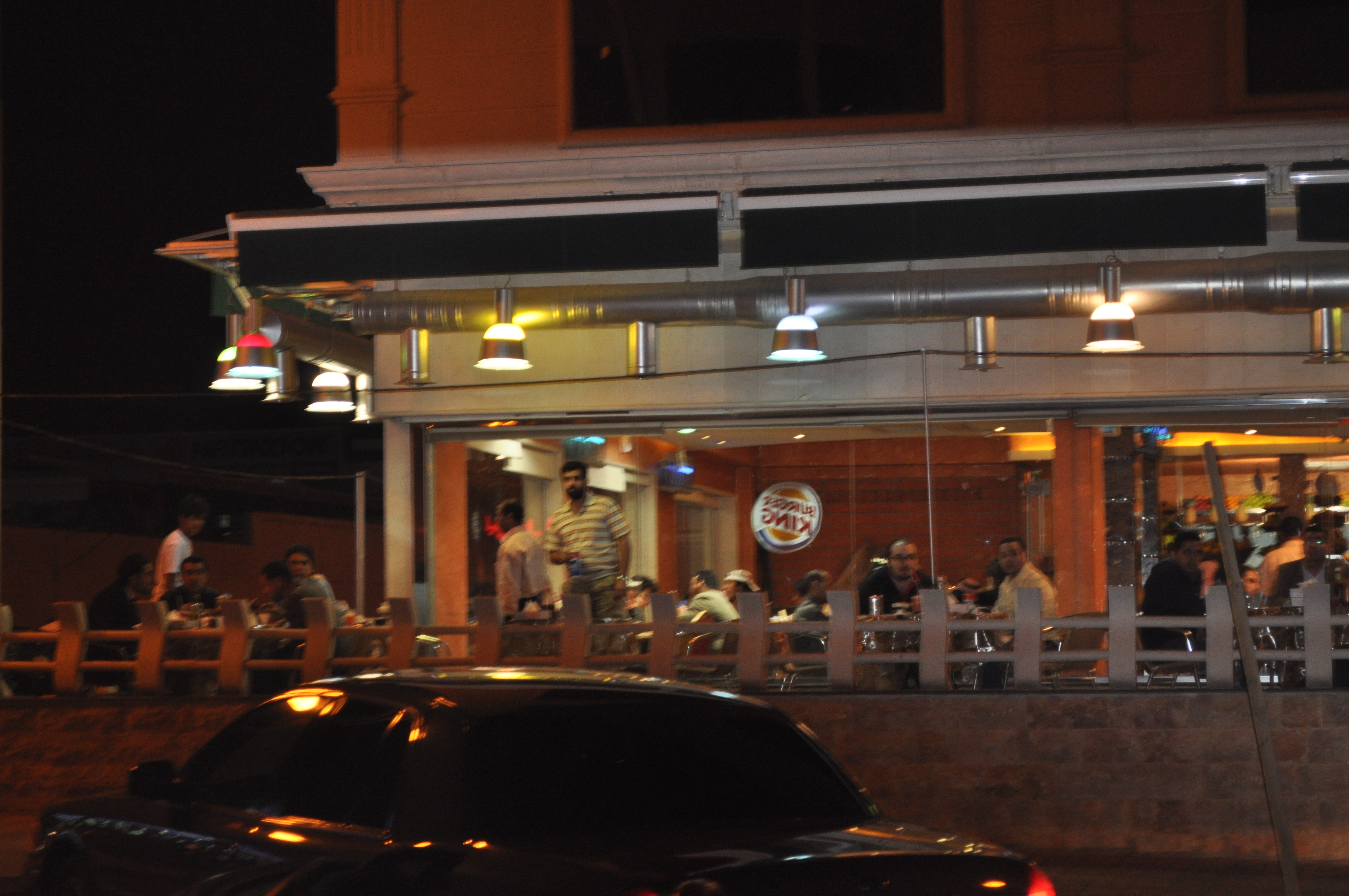
Restaurants too were packed. These photos were taken at 12:30 am.

The police blocked the crossroads in the middle of al Tahlia street so that the cars would have to disperse left and right.

Some say that the police were right to do so. This is an area in the middle of the city and by behaving this way, these men are causing traffic issues. There is an area just outside Riyadh, Al Mounisiya, next to King Fahad stadium where there is a cluster of sheesha (hookah) shops and restaurants. Also that area is famous for its  isterhas (weekend houses) which are available for nightly rent. So you can’t say that they have no place to go.

36 Comments

Filed under Culture, Fun

What The Fatwa?!

I borrowed the phrase in the title from my friend Mona el Tahawy because if anything deserved a WTF then it definitely is the case of a woman in my hometown Al Ras, a little town in Qasseem where everyone is related in some way to everyone else. The woman is married to a Saudi and is now a naturalized Saudi herself. She was accused of making false malicious complaints against government officials working on a case raised against her husband. And she was also accused of going to the courts and government offices without a mahram (male guardian). Apparently the judge has now deemed that women without a mahram going into the court or government offices for their issues  an offence!

She was sentenced a year and a half in prison and 300 lashings. The judge also threatened her with withdrawing her Saudi citizenship and deportation. She has already started her sentence at the women’s facility in Qaseem and has her infant daughter in there with her too. Her side of the story was that she went to government officials to seek justice for her husband and was received with insults and ridicule. So she courageously took it took it upon herself to go to the courts herself and complain. What was she supposed to do?

I don’t remember ever reading that the Prophet PBUH turned women away telling them to come back with their mahrams. Let alone punish them for it! And what if a woman was abused by her mahram and wanted to seek help?! This judge is wrong on so many levels, and that’s only natural without codified laws. She probably rubbed him the wrong way and he decided to take out his annoyance any way he could. He threatened her with taking away her citizenship! I thought those can’t be taken back. What’s next? Are we going to threaten non tribal Saudis or expel specific tribes like Qatar did?

As you can tell by the photo above, they are real simple people. Al Thawab (her husband’s family) aren’t known for their riches and power. The whole story is just plain dodgy. And yes that’s her in the picture. She was born Sudanese.

The photo is linked to the news article that was reported in Okaz newspaper.

Update:

I checked the gossip mill and some people think that she was  just unlucky, timing-wise. Because at the same time her case was in the courts another  case regarding a judge was also being reviewed. The judge was accused of making false and malicious claims and the Al Ras court really had it in for him and gave him 10 months prison and 120 lashings. People speculate that when the woman’s case came up, the court wanted to ‘seem’ fair by being harsh on her too! Now the accused judge is appealing and will probably go around in circles until his case is dropped while the poor woman, due to her lack of wasta (nepotistic) influence, will have to take the fall.

32 Comments

Filed under Fatwas, Gender Apartheid