
Category Archives: Culture

The great return

A week ago, AlRiyadh newspaper interviewed the minister of higher education and he had some fascinating things to say. If you read Arabic it is really worth reading through the whole interview and if you don’t then you’ll just have to make do with my post about it.

Before getting to the interview, let me explain the context. Soon after King Abdullah came into power in 2005, he initiated the King Abdullah scholarship program wherein each year thousands of young Saudis are sent abroad for BAs, MAs and PhDs. This in itself is not a new concept in Saudi Arabia because in the seventies and early eighties, scholarships were given out freely. However since the mid-eighties they became a lot more restricted. The reason for this sudden pull back has never been openly explained or even acknowledged. And one of its consequences is that Saudi society became even more closed up within itself. So when King Abdullah came along and opened the door wide to all qualified Saudis, many took advantage of the opportunity. The importance of these scholarships to Saudi society is beyond just the educational. To have thousands of our own men and women experience life outside the muttawa ideology bubble will have a huge impact on our future as a people and a country. And it seems that the minister of higher education, Dr. Al Mousa, is of the same opinion. He views the scholarship program as a cultural, social, political and economical integration.

So far the program has wrapped up five phases, the last was this year in which they gave scholarships to 8223 postgraduate students. And that tallies up the number of students on scholarships since 2005 to about 80 thousand. And they are sent to many different countries such as China, France, Germany and Japan. The choice of countries and courses of study to include in the program is left to a committee of 30 professors and professionals. Recently they had considered the Ukraine, however after visiting the universities there, they decided against it. The best universities for medicine according to this ministry appointed committee are the University of London and the University of Maastricht in Holland in which they have reserved 80 places for Saudis. Also an unnamed Canadian university in which they have reserved 300 places. The countries with the highest number of Saudis in their universities are the UK and Australia, so much so that the ministry has decided to stop sending students there for the foreseeable future.

All students who are granted a scholarship must go through an intensive three month English language course and attend workshops and lectures on cultural differences and on how to conduct themselves abroad.

Out of the approximately 70 thousand sent in the past four years, 825 have graduated. 100 of them were given jobs at Al Qaseem University. This is just fantastic because Qaseem is a region notorious for its muttawa ideology and so to have 100 Saudi men and women who have seen and lived abroad work in one of the region’s most influential places can only be good. Others were employed by SABIC, the Saudi airlines and STC.

The minister was also asked about problematic students. According to the minister, 1573 scholarships, 3% of the total, in the past four years were revoked, out of which only 117 were due to moral or legal misconduct. The rest were mainly due to absenteeism and low grades. He comments that these statistics show that the program is a success.

10 Comments

Filed under Culture, Education, Informative

H1N1 conpiracy theories

rabeah

Yesterday morning the minister of health, Dr. Abdullah Al Rabeah publicly got himself and one of his daughters vaccinated at a launch ceremony for the H1N1 vaccine campaign. This was reported in today’s newspapers. So I went through the comments posted on the article and just as I suspected many if not most doubted that what was in the needles used on the minister and his daughter was the vaccine or just water or vitamins. I’ve heard this so many times and now it’s posted for everyone to see; our obsession with conspiracy theories.

Logical arguments have no power at all in these cases. Just last night I was on the phone with a friend who had kept her daughter out of school this year and absolutely refuses even the idea of the vaccine. She touts around a newspaper article about an official from New Zealand being fired from the WHO because he/she has voiced objections to the vaccine.

I agree that the H1N1 might be over-hyped in the media and that drug companies are making good money out of the vaccine. But that the Saudi health minister would be in on a conspiracy to vaccinate Saudi citizens?! Some of the rumors going around are that it makes people sterile and that its effects do not become evident until five to ten years later. And so the minister would know this as a fact and like a villain out of a movie, he would push the vaccine on the Saudi population. We watch way too much TV.

Besides the CDC and the WHO websites for those with vaccinating, there are two websites that I found that are against the vaccine but base their arguments more on science rather than conspiracies:  Dr. Meryl Nass’s blog and NVIC. 

7 Comments

Filed under Culture, Regional and International

The Ideology of Control

This is from an article I wrote for the November issue of Relativity Online:

Ultra-conservative Saudi families, and they are a majority, have a general dynamic that few Saudis could deny.  Like old-fashioned western family ideologies, the father is the breadwinner, the mother takes care of the home-front, the sons are served and tolerated and the daughters are the bit of fluff that flutters around the house.

But unlike most other cultures, daughters also have to contend with constant supervision of their every move. A job that some brothers feel falls on their shoulders. No matter what age a woman is, many families believe that as long as she is single, she is a liability. This translates into horrific intrusions of privacy and personal freedom. In one extreme case, a family I know has no locks on any of the doors including the bathroom doors, so that to insure the daughters cannot seclude themselves and do anything inappropriate; pre-approval of clothing, whether at home or when leaving the house, is common.

A friend of mine once told me she had to sit for over two hours in an uncomfortable position because she had pajama pants on and was afraid her father, who had come early from work, would see them. And this is not only with teenage girls, but also adult women… even divorced mothers. So what’s a girl to do in this situation? Many go by the Arabic saying that translates into “a woman has only three places in this world: her family’s home, her husband’s home or her grave”. Read more

7 Comments

Filed under Culture, Gender Apartheid

Please let us drive

The academic year is starting and it is so dreadful dragging the driver around. Tell me what should I do when I have a class that’s 90 minutes long and it takes a 30 minute drive to get there; it’s terrible to make the driver wait outside in the heat and I have to rush out asap so no after class discussions. Or do I let him take the car home and pay for double the gas and have to wait for him to get back?!  And that’s just the tip of the iceberg. I’m one of the lucky ones that have a driver to myself. I have cousins who sit at home after college because they don’t have a driver and their brothers and fathers are unwilling to drive them around. Others have one driver that they have to share with two or three other sisters. These are adults who have jobs and are responsible as teachers and bankers and yet they have to bear the huge inconvenience of scheduling their trips around each other plus taking into consideration breaks for the driver. And they can’t just hire another driver because it’s a lot more complicated than a few job interviews. They have to pay for a visa (about 2000$) and literally adopt a grown man by ensuring his accommodations, food and everything else.  

In Saudi forums those who oppose lifting the ban on women driving have four arguments that they keep going on and on about:

1-     There are much more important rights that Saudi women should be demanding and prioritizing above lifting the ban on driving. These “other rights” are never spelt out but left ambiguous in every single forum I’ve come across.

2-     That women driving is prohibited in Islam. This has been refuted by the majority of living Saudi sheikhs. However the people who use this argument keep going back to fatwas written by two dead sheikhs who were the inspiration for today’s Taliban lifestyle in Afghanistan.

3-     That Riyadh’s streets are already overcrowded and cannot take the influx that the lift of the ban might cause. To this I say, I have as much right to those streets as any man. Plus this is nonsense because most drivers have to make twice the trips that women would have without the drivers. For example the driver drops off a woman at work and goes home and then goes back to pick her up which means that that single car makes at least four trips a day. Hence using the streets twice as many times a woman would have if she was driving and parking her car at work.

4-     Our men cannot handle seeing a woman behind the wheel. It’s too sexy for them to just look the other way. And women would use it as an excuse to take off their face covers and act like the sinful adulterous beings that wise Saudi men have so far kept tame and locked up. To illustrate here’s a skit that was recently posted on Youtube, it’s in Arabic but there isn’t much talk going on so anyone can understand it. Two guys are hanging out and one guy’s sister calls and tells him that their father needs to go to the hospital and so he takes him. Later when they are hanging out again, one wishes that his sister could drive so that he wouldn’t have to worry about his father getting to the hospital. The other guy says no you don’t want that for your sister. They decide to conduct an experiment by one of them dressing up as a Saudi woman while driving and the other guy pretending to be a husband in need of medical attention in the passenger seat. Chaos ensues.


This ban on women driving makes no sense religiously because Muslim women should not be spending so much time and in such a small space with an unrelated man. It makes no sense economically. 27% of the Saudi population is made up of migrant workers. Sixteen billion dollars in salaries were sent outside Saudi by these workers in 2007 alone. And this sector of our population grows 5% annually. A fairly huge chunk of that 27% is men who come to drive Saudi women around. It makes no sense socially to have these strange men who we know nothing of driving our kids and teenagers around. It’s just not logical.


I propose that all Saudi men be banned from driving for at least three days so that they know what it’s like for us. Even better yet as a sign of solidarity with Saudi women, other countries should ban Saudi men from driving until they give us our right.


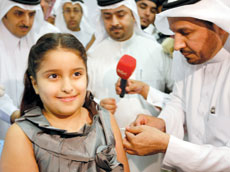
Finally a plea to King Abdullah from a little girl who wants her mommy to drive:

Translation: Girl says I want to take a flower and a card with a question asking why can’t women drive in Riyadh to King Abdullah. Man’s voice asks why do you want to do that? She says because I want my mother to be allowed to drive. Man says what if the king says that that is the law and the girl shyly responds that she’ll just say ok.

44 Comments

Filed under Culture, Gender Apartheid, Women driving

A word not unlike nigger

As a student of linguistics I know the immense weight that language carries beyond just a means of communication. And nothing reflects that in Saudi Arabia as does the use of the word hurma (singular) and hareem (plural) to refer to women. Before the ultra-conservative fundamentalist direction that many people of the GCC countries have taken, women were not referred to this way. At the time of the Prophet (PBUH) and in standard and classic Arabic, the words muraa and nissa were used. However in the past century, as more and more things were deemed prohibited concerning women, the word haram (prohibit) was slightly altered to refer to women. Yes, you read right, women are referred to in GCC dialects as “the prohibited”. This has been so ingrained into the language that women themselves use it. A Saudi woman speaking naturally and casually will say “Ana hurma(I am a prohibition)”.   Even I unthinkingly use it.

26 Comments

Filed under Culture, Gender Apartheid

“My Guardian Knows What’s Best for Me”

In August a campaign was launched titled “My Guardian Knows What’s Best for Me”. The aim of the campaign is to stand against women who are demanding to be treated as adults. Yes you read it right, a campaign that demands that the status qou remains as is. The campaign is headed by two  princesses and has two rivaling websites. And since it has gotten a lot of attention and some rumors that the two princesses were fighting over whose idea it was, the “Who are we” page has been taken down on one of them. The goal of the campaign is to gather one million signatures from Saudi women who support it. On the bottom of the main page of the weaker website is a button that says click to vote and when you click it, it automatically counts as a vote of support! The other website’s button actually asks for specifics like name and city. The stronger website is here and the weaker one here.

Below I’ve translated Dr. Elham Manea’s piece on the how and why of this campaign: 

I swear I almost smiled, but how could I smile?
Then I said to myself, that people are people, in their wisdom or weakness, here or there, no difference.
So I contemplated rather than smile.

Some Saudi women have decided to express themselves.
They wanted to take a stand against human rights activists calling for Saudi Arabia to give women some (not all) of the rights that are enjoyed by their Arab counterparts in neighboring countries. So they came out with a new campaign titled “My Guardian Knows What’s Best for Me”.  
Do we blame them? All they wanted was to fix a problem they know nothing of, and thus made it worse.  It would be strange to expect anything else from them. You cannot miss what you’ve never had.

Most of them belong to the Saudi aristocrats. Their leader is a princess. Their hands are velvet. They live in palaces and villas. How could we blame them for not knowing the reality of average Saudi women?

These campaigner are only worried about Saudi women. They are protecting women from themselves.They are protecting us from activists, activists who have lived the reality of being a Saudi woman in the East, West, North and South of Saudi Arabia. They know how we suffer, and how we are subjected to humiliation on a daily basis. Luckily, these activists are not princesses.

These activists believe we should be treated as adults and humans and not as children and minors, and not as digraces to be covered. Activists who are tired of this reality of suffering and daily humiliation and so they call for the guardian system to be absolved.

These campaigners who stand againsts activists see nothing strange in the fact that we are the only Muslim country that bans women driving. Isn’t it funny that Saudi Arabia is unique in this odd religious aspect? But it has always been so. They don’t wonder as to how a woman’s freedom in our country has been choked and strangled a thousand times over,so that the poor soul cannot make a move without a male’s permission, a male who’s only distinction is his genitals. To the degree that we see nothing weird about a twenty year old being reprimanded by her ten year old brother.

My guardian knows what’s best for me, seriously?!

They do not see anything strange in that the women of their country cannot make the smallest move without their guardian’s permission. They have no right to leave their houses, to study, to go to a clinic…without their guardian’s permission. And the guardian is a woman’s father, brother or any related male until she marries. And then her guardian becomes her husband until either one of them dies. Her guardian may marry her off at ten, hit her, abuse her or may be kind to her, it’s all up to luck. Her life like a watermelon, it might open up to be red and sweet or bitter and rotten.

These campaigners live like princesses and the restrictions that stifle average women daily, do not apply to them. Have they ever faced a PVPV  commission member who stole their very breath. If a PVPV commission member even set his eyes on them, he would shake from fear, because the only power that the PVPV recognize is the power of your guardian. These men know nothing of religion.

My guardian knows what’s best for me, seriously?!

They never wonder and they never question. Instead in a naiveness that is to be envied, naiveness reminiscent of Marie Antoinette, they are bothered by the demands of the women who have suffered. And so they send to the king, asking him that this system of injustice be maintained.

They say “Who said we need to be human?”
“We do not want rights that contradict our customs!”

“Stop their demands!”

“Cut their tongues!”

“Silence their voices!”

“Leave us as we are!”

“An object in a degree closer to the animal! (With all due respect to animals)”

And surprisingly, I am not surprised. Not surprised by the campaign.
And you know why?
Because the history of  movements demanding women’s rights throughout the world, was full of similar campaigns to this “My guardian knows what’s best for me”. For every woman who demanded her rights, stood more women who cursed her, in the name of tradition, in the name of customs, in the name of religion (whatever that religion may be), and shamed her for seeking change.
This campaign is not strange.
It is similar to another campaign carried out by women in Switzerland in the twenties and then again in the fifties and sixties against women’s right to vote. They too used religion, customs and traditions as an excuse to stop development.

Even in this, they are not unique.
People, as I said before are people,in their wisdom, and strength and in their weakness and simplicity.
Here or there. No difference.

But my guardian does not know what’s best for me.
I am worthy of making my own decisions.
And only I know what’s best for me, even as I bow my head in respect to my father.  

Those campaigners insist on staying minors.
That is their decision. But who said that they speak on behalf of Saudi women?

61 Comments

Filed under Child marriages, Culture, Gender Apartheid, Women campaigns

Punishment in Saudi Arabia

We’ve all heard or read about the strict laws and forms of punishment in Saudi Arabia. The most notorious of which is cutting off the hands of thieves. But many people don’t dig deep enough to know that a thief has to steal a substantial amount to get that punishment. No one gets their hand cut for petty theft, but when you have a gang who goes around robbing houses, then that punishment comes onto the table. In all my years here, I’ve only heard about it happening once. A friend of mine had their apartment robbed. Jewelry, TVs, computers and everything of value was taken. Eventually the robber was caught and my friend’s father was asked if he would forgive the robber or not. His refusal to forgive him contributed to the judge’s decision to have the thief’s hand cut off. I don’t know the details such as whether or not the thief had a previous history of stealing. I do know that this type of punishment does not happen often. Another instance is one time my husband and I met a real estate agent to show us a house we were interested in. This guy was a young apparently healthy Saudi guy and one of his hands was cut right at the wrist. Both my husband and I did not say anything so I don’t know if it was cut off as punishment or due to an accident or illness but I bet lots of people wonder when they meet him.

The punishments that are most newsworthy when it comes to Saudi Arabia, are the ones given to people guilty of khilwa (unrelated man and woman alone together) and extramarital sex. A punishment for khilwa is common and we’ve all come across muttawas trolling coffee shops and restaurants searching for pairs who seem too happy to be related. But what happens after they are caught? I don’t know about expatriates but with Saudis, the man and woman are separated at the spot and questioned to see if their stories correspond. Questions like name, relatives’ names and even color of furniture, address, employment and all other things married couples naturally know. If they fail the test or refuse to cooperate, they are taken to the local muttawa center. The girl’s father is summoned and the guy is locked up usually after being given a few slaps and punches. The girl is handed over to her father (if he’ll take her) and the guy is later released after they put his information into the system. He is then required to show up in front of a judge, usually two weeks later to take his sentence. How he appears at the sentencing decides his fate more than anything else. The way he dresses and addresses the judge has more influence than the number of times he has been caught, how and where he was caught…etc. His best bet is to dress like a muttawa, start to grow a beard, hold his head down and look remorseful. He should also tell the judge that since the incident, he has become a born again Muslim. If he could get an established muttawa from a mosque to vouch for him, then he might be lucky enough to be let go with a warning. Otherwise he will most likely be sentenced a number of lashes across the back.

Extramarital sex on the other hand is extremely serious and at the same time very hard to get convicted for. In the Holy Quran, it states that four witnesses to the act have to be found for it to be punishable. Here, unless a person has confessed or made a tape it’s unlikely to be considered as extramarital sex. Even if an unrelated couple checks into a hotel together, they will only be convicted of khilwa. In cases where a confession is made, then other things come into play, such as was it consensual or rape and whether either of them was married at the time. Infidelity is an automatic death sentence. Singles are imprisoned and whipped.

Young Saudis have their ways to get around these laws. One that I heard of is that they go in groups. Another is that the guy takes his sister along and voila it is no longer a khilwa.  

150 Comments

Filed under Culture, Informative

Ramadan Kareem

Ramadan in the Middle East is something that I will always be thankful for; a whole month when everyone everywhere slows down and reflects. All healthy adults fast from food, drink, sex and actively strive to be kinder, more generous and calmer from sunrise to sunset. For financially able adults who cannot physically fast due to health related reasons, they have to feed one poor person each day of the month.

In Saudi Arabia, it’s all about giving. Tents are pitched every few blocks and anyone can come in for a meal at sunset. Charities give out enormous amounts of food and clothing supplies. And on the last day of Ramadan, literally tons of bags of uncooked rice are handed out to the poor.

Within households, Ramadan has its own unique atmosphere. Special Ramadan recipes are prepared. Neighbors exchange dishes just before sunset. And people throw Ramadan themed parties where all the kids get to dress in Saudi traditional clothes and collect little bags of toys and candy.  

The whole daily schedule is turned upside down. Work hours are changed with the majority of employers only requiring a maximum of six hour workdays. And then there’s the shopping and build up towards Eid. If you want to avoid the crowds, do not go shopping from 9 pm to 2 am. But if you really want to see the natives in action, that’s the time to hit the malls.  

13 Comments

Filed under Culture, Fun

They always have been winning and probably always will…

If you read anything related to Saudi Arabia or have a conversation with someone living there, inevitably this remark comes up”but change is coming soon”. Well from my perspective, it’s just not true. Short of an outright war or a western invasion, women will never get their rights. I remember a Bahraini friend of mine telling me how her grandfather respected her grandmother because he was influenced by the British. Sometimes the thought that we would actually be better off if we were colonized in the late 1800s and early 1900s like our neighbors creeps into my head.

The muttawa way of life, in which everything that brings a smile to your face is HARAM (prohibited), is integrated into the very heart of our society. Music, plays, festivals even when they are segregated are strongly discouraged. And the prohibition is only related to doing it in public. It is a fact that most Saudis do not practice what they preach. Get on any plane leaving the country and witness it for yourself. Abayas come off and men and women become much more relaxed. Women are pressured and brain-washed into living the way they do. But why do men live the way they do, when for many it is obvious that they would rather be more relaxed with their families and have their wives drive their own cars…etc.

International tourism was not affected by H1N1 or the economy in Saudi Arabia. Strangely enough, more and more Saudis are leaving the country each year for a vacation. I know one woman who actually took a loan from the bank just to treat herself and her family to a trip to France. Another woman in her sixties, never had a passport until two years ago and ever since all she talks about is where she’s going and where she’s been for the summer. Just a week ago, there was no traffic in Riyadh! And I could get an appointment at my favourite hairdresser on the same day! Usually it takes at least two weeks advance planning. Everyone was outside the country.

And then they come back to another year-long round of pretending that they agree that everything should be prohibited. I think that what goes through their heads is something in the vein of “well I can handle all this freedom because I’m a responsible person but my fellow citizens need to be treated like caged animals, otherwise they’ll go crazy”. By crazy they mean things like convert to another religion, openly announce their homosexuality, walk around in revealing clothes and/or promote someone that has no blood relation to them.

But these things have not happened in any of our surrounding countries. Why can’t they see that a little freedom does not mean Hollywood?!

20 Comments

Filed under Culture

We are the world


Michael Jackson

When I first heard about Michael Jackson passing away, I was sad. But when a friend suggested that I should post about him, I said no, this blog is about Saudi Arabia and MJ is an American icon. However the more I think about it I find that there is no way that anyone could say that he is only American. He has had such an impact all over the world and a very special impact here in Saudi Arabia. In the eighties he was the first non Arab to penetrate the thick muttawa influence. I remember the huge VCR thriller tape that was obtained on the black market and considered so valuable that people would not lend it to anyone. My cousins and friends would watch it over and over until the tape would go gray and choppy and they didn’t even understand English! I remember a religious lecture I attended in which the muttawa lady was telling us about a Saudi who was led astray through listening to music. The Saudi, she claims, got in a horrific car accident while listening to MJ’s music and died singing along instead of saying al shahada. At the time, all I could think was wow this muttawa knows MJ!?  

Before the internet and satellite TV, most Saudis didn’t know the names of world leaders and got most of their information filtered by fanatical and political agendas, but MJ was the only person that was able to cut through all that and reach even here.  

5 Comments

Filed under Culture