Unemployment and those crazy numbers.

I’ve written about unemployment before here and here. The picture is just getting blearier. Saudi men are having trouble finding jobs with an unemployment rate of 10.5% and more than 449,000 open applications for government jobs in 2009. Compare that to 2008 in which the rate was 10% and the files 416,000 . As Abdulaziz Al Owashiq observed this is at a time when the economy is rising and yet the employment rate is going in the opposite direction. Another interesting observation of his is that the majority of those unemployed are those that should be the easiest to employ; 43% of the unemployed are between the ages of 20-24, 44% have at least a BA and 80% are single!

If that’s how bad it is for men can you imagine how tough it is for women? Now the numbers on women are so bad that the government won’t even acknowledge them.

Dr. Mona AlMunajjed in cooperation with Booz & Co did an extensive study on Saudi women unemployment rates and the reasons behind it. The report is in English and worth a read.  An Arabic summary of this was published in local newspapers. The article included the findings that 1000 women PhD holders are unemployed, and it was this that was put as a header and that seemingly offended the government the most. Two weeks later the Ministry of Labour’s spokesperson came out denying that there were any jobless PhD holders and demanding an apology which Booz & Co generously provided. Dr. Adel Al Salah conducted his own investigation and unsurprisingly found that Booz & Co and Dr. AlMunnajjed had nothing to apologize for and that their study was legitimate. But nothing gets the Saudis all prickly like the news that citizens might actually be unhappy, especially women. We’re all queens and sheltered jewels.

Watani is a news organization which for the most part disseminates information to cell phone subscribers within the Kingdom and has only recently started a website. This organization is ultra-conservative and sporadically sends interesting insider information that is rarely published in regular Saudi media. Recently they have sent some of their own crazy numbers. On Tuesday 1st of June they sent a cell phone text reporting that the Ministry of Civil Service received no less than 11 thousand applications with fake male names or just initials that turned out to be sent by Saudi women applying for jobs offered to men only.

When it comes to the reasons behind all these miserable numbers, multifaceted is an understatement. The private sector is not interested in Saudis and it’s hard to blame them. As a business owner, would you rather have imported cheap labor who will literally live for your business in a little room you provide and work day and night, or a Saudi who will demand at least double the pay and half the hours? And then of course the culture does little to help the situation. Hard work is not regarded highly by Saudi society. Young Saudis aspire and look up to heirs who wake up at noon with jobs that consist of spending a couple of hours in a luxurious wood-paneled office signing forms. There’s not much respect for police officers, firemen, nurses or even small business owners. Above all many Saudis suffer from entitlement syndrome; the countless number of times I’ve heard “I’m a Saudi from so and so tribe, I can’t just take any job.” And when it comes to Saudi women, it gets even funnier. Because many will only accept on two conditions, they can only work until noon and they have to be paid as though they have a full-time job. Moreover the environment has to be gender-segregated. So if you are private sector you have to rent two locations or two sets of offices, one for men and one for women, that is if you want to employ women. The only exception is hospitals, clinics and extremely rare and untouchable companies in the major cities.

17 Comments

Filed under Culture, Gender Apartheid, Informative, unemployment

Germany from a Saudi Perspective

I was invited by the German Foreign Ministry to spend ten days in Berlin as part of a blogger tour initiative. I’ve never been to Germany before as a tourist, let alone a guest of the government. It was an educational experience in which I learned a lot about Germany and also the countries of the 14 other bloggers who were invited too. read more

32 Comments

Filed under Eman, Regional and International

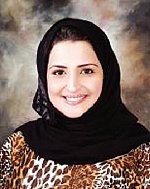
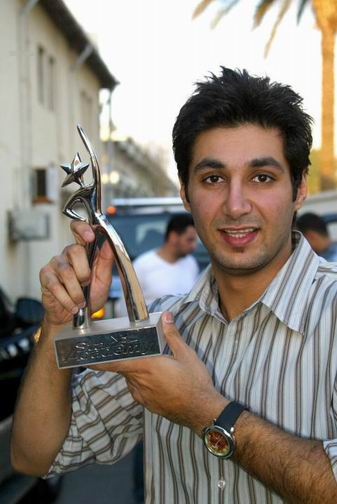
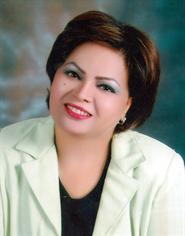
Ten most beautiful Saudis

10- Dahi al Ali

Designer with his own line called Kalima.

9- Samar Al Moqren

A controversial novelist and opinion writer.

8- Shiekh Mohamed Al Arefe

Although I might not agree with him, there’s no denying that this sheikh is handsome and charismatic.

7- Raja Al Sanea

So fresh-faced and young, no one could have ever expected that she could have produced the book Girls of Riyadh that was initially banned within Saudi Arabia.

6- Yaser Al qahtani

Famous soccer player with numerous endorsement deals including Gillette, Head and Shoulders and Pepsi.

5- Hisham Abdulrahman

Presenter and game show host with a fantastic sense of humor.

4- Saud Al Dosari

Interviewer and radio show host who just gets better with age.

3- Ebtihal Al Mubarack

Bold journalist and women’s rights activist.

2- Muna Abu Sulaiman

TV personality, past Goodwill Ambassador and currently works for HRH Prince Al Waleed bin Talal.

1- HRH Princess Amira Al Taweel

The wife of HRH Prince Al Waleed bin Talal.

105 Comments

Filed under Fun, Personal favorites, Popular

No way out

An 18 year old Saudi girl on May 24th shot herself with her 50ish husband’s rifle only a week after the nuptials. She left a note asking her family to forgive her and to pray for her. She also requested that her mother be the one to prepare her body for burial. According to the family, she had agreed to the marriage but had shown signs of depression the weeks leading up to the wedding and the first few days after marriage.

I thought about not writing about her but then I remembered what one social worker told AlRiyadh Newspaper that she knows of 3,000 child-bride marriages to much older men just in the past year. If an 18 year old would rather die, can you imagine how those 11 and 13 year olds feel?

I can pretty much guess the tactics that the family used to get acquiescence. I’ve seen it happen time and time again. One girl I know when she refused a suitor that her family liked, they ground her while her mother nagged her about it and her teen brother refused to eat or drink until she agreed to marry the suitor. This was a girl fresh out of high school.  Although the groom was in his twenties, the girl was obviously not ready. While they were dressing her for the wedding, she told everyone that she will be single within a week. Surely enough a week later she came home and locked herself in her room until her husband divorced her. Unfortunately she had gotten pregnant and their child was raised by parents that should never have been.

Depression and suicide are a sad reality no matter where you live and whatever your background. However they should not be caused by being deprived of choice. Pressuring young women to get married might be a lesser evil than child marriages but it is an evil nevertheless.

Sources:

Alriyadh newspaper

Okaz Newspaper

Qathaya Al Mujtima Newspaper

18 Comments

Filed under Child marriages, Culture, Gender Apartheid

What’s front page news in Saudi Arabia?

It never fails to amaze me how in a country where women are only seen covered head to toe in black and get educated and work in mostly gender segregated institutes, and yet men are completely obsessed with them. The latest is a fatwa that originated in Egypt and was recently renewed by Shiekh Al Obiekan in a TV interview. He was asked if it was alright to breastfeed a grown man in order to be able to raise the segregation rule between a man and a woman and he replied with a yes! This was given major coverage in both AlWatan Newspaper and AlRiyadh Newspaper. But before I go into the details of the fatwa, some background information:

Breastfeeding is encouraged in Islam up to the age of two, after which the child has to be weaned. If a woman breastfeeds a child that is not her own, that child becomes her son by breastmilk and she and her daughters do not have to cover from him when he becomes an adult. However she has to breastfeed him before he turns two and it has to be five separate fulfilling sessions of breastfeeding. This is popular in Saudi Arabia especially among sisters because then they won’t have to worry about segregating their kids later. The cousins would be considered as “breastmilk siblings”.

It all began in May 2007 when an Egyptian Sheikh called Mohammed Atiya came out with a fatwa advising women to breastfeed their male coworkers if their job entails spending time alone together. Shiekh Atiya was quickly fired from his post at the Azhar University and the whole thing was swept under the rug. Until this week when Shiekh Al Obiekan, a royal judicial consultant at the Saudi Ministry of Justice renewed it all by replying to a question on a TV interview. He stated that in cases where a household needs an unrelated man like a driver to repeatedly visit the house, it is allowed for the woman of the household to breastfeed the stranger so he becomes a relative! The shiekh’s only condition is that the man does not drink directly from the woman’s breast but that the milk be pumped and then offered to the man in a glass. But this condition was revoked by another sheikh, Abi Ishaq Al Huwaini, who insists that the breastmilk must be sucked by the man directly from the breast!

The whole issue just shows how clueless men are. All this back and forth between sheikhs and not one bothers to ask a woman if it is logical, let alone possible to breastfeed a grown man five fulfilling breastmilk meals. As I’m writing this, I’m  cringing at just the thought of it. I’m a huge advocate of breastfeeding and I’ve exclusively breastfed my three kids for at least six months each. Plus I’ve also done the “breastmilk sibling” thing for two nephews and a niece. Breastfeeding a baby is hard work and it takes a toll to be able to produce enough for a one year old, I can’t even imagine how much a thirty year old would need. Women do not produce breastmilk on demand, you have to have had a baby recently and breastfeed that baby daily or otherwise the milk will dry up within a few days. Also breastmilk is not that appetizing, it has the look and taste of skim milk, so not that many men would be able to stomach five meals of it. Moreover the thought of a huge hairy face at a woman’s breast does not evoke motherly or even brotherly feelings. It could go from the grotesque to the erotic but definitely not maternal!

218 Comments

Filed under Fatwas, Gender Apartheid, Popular

Much ado about women

Sheikh Al Najaimi who announced his support for the Al Barak fatwa that anyone who calls for gender desegregation should be killed was caught last month attending a women’s day conference in Kuwait. The conference’s attendees were mostly women and there was no segregation at all. He sat for hours with women and even had a meal with them. When he got back to Saudi Arabia, he told everyone that the majority of women were menopausal and as such it is Islamically allowed for him to socialize with them. Of course, this is not true. In the Quran, the verse is very clear that it is the woman’s decision whether or not to announce that she is post-menopausal and just being menopausal is not enough, she has to have no interest in men too. However, Al Najaimi took it upon himself to make this milestone decision on behalf of all the women attending the conference. Moreover he proclaimed that those who weren’t post menopause confessed to him that they were committing a sin by not covering!

A woman who shiekh Al Najaimi insisted is post menapausal even when she denied it. He said to her face "you are post menopausal whether you admit it or not!".

And then the Deputy Minister of Girl’s Education Ms. Nora Al Faiz, made it a point to appear in photos taken at official meetings in full face cover to even more discredit the photo of her face that was highly publicized when she was first appointed. I’ve met a few teachers since then and they keep telling me that they or other colleagues are uncomfortable with such a liberal woman!

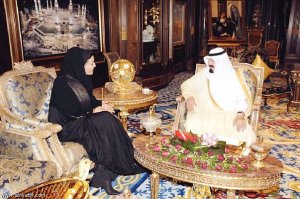
At the same time, King Abdullah had a photograph of him and Princess Mozah, the ruler of Qatar’s wife, on the first page of most major newspapers in Saudi. And then another photo of the king and Prince Sultan with a group of Saudi women, many with their faces uncovered surfaced everywhere. And this one had the names of those women published alongside it as if to show that tribal Saudi women from old families have no issue with having their pictures in newspapers.

It is rumored here and here that recently a Saudi woman declared on a forum that she will stand in the middle of a major highway in Riyadh and burn her face cover and hijab, she was apprehended within a few hours of posting. She goes by the name of Wedad Khalid and lives in a posh area of Riyadh. On her post (I haven’t seen it personally) it is reported that she was going to do it on June 12th 2010 and she invited people to video tape it. She also stated that a couple of years in prison are worth standing up to the hypocrisy of Saudi society. It was reported that within a couple of hours she was reported, tracked down and arrested.

It’s a crazy time to be a Saudi woman. You’re pulled in every direction and a simple and personal decision like covering or uncovering your face decides your spirituality and political stance  and affects everything from family to career.

28 Comments

Filed under Culture, Fatwas, Gender Apartheid

The man of the hour

Great controversy is brewing in Saudi Arabia and it all starts and ends with Sheikh Ahmed Al Ghamdi. Al Ghamdi is a 47 year old PhD holder in administration and strategical planning and also has spent 15 years studying Islam.

The whole issue began when Okaz Newspaper published a lengthy article last December written by Sheikh al Ghamdi in which he proclaimed that there is no such thing as gender segregation in Islam. He stated that what we are at today is based on extremism and cultural considerations. Moreover he points out that the very thing that we have been prohibiting is practiced in most Saudi households with the presence of maids. Anyhow this is not the first time that a Saudi sheikh has written about the illogicality of gender segregation. Sheikh Ahmed Bin Baz wrote about it and so did the judge Eissa al Ghaith. Although both got an earful, their articles were eventually forgotten. The difference with Sheikh al Ghamdi is that he is head of the Makkah PVPV commission. And as everybody knows, maintaining gender segregation is one of the highest callings of the PVPV. So for Sheikh al Ghamdi to come out and say that this form of segregation is Islamically baseless, it becomes an issue of conflict of interests. And then he tops his gender segregation article with another article on not banning shops from business during prayer time. Going around shopping areas to insure that they close during prayer is another main component of a PVPV member’s job description. As one journalist points out, Shiekh al Ghamdi may be free to write what he thinks but as an employee of the PVPV, he shouldn’t be publishing things that go against their policies and practices.

For the PVPV and the whole ultra conservative majority, to have one of their own, someone who they had given a high position in their hierarchy go against their beliefs is a slap in the face. Attacks on Shiekh al Ghamdi’s character, credentials and articles were on every one of their TV channels and papers. Some claimed that he was paid to write what he wrote. And then a group of influential muttawas got together and decided to invite Sheikh al Ghamdi to a televised debate. He came onto to the show and it struck me as more of a trap. Insults were thrown at him right and left. The opposing debaters instead of discussing al Ghamdi’s points kept calling him a mere accountant who doesn’t know what he’s talking about. Another claimed that al Ghamdi was blasphemous towards the Prophet (PBUH). The call-ins were a confirmation of my belief that the whole show was a set up. Again a bunch of sheikhs called in and insulted al Ghamdi and then HRH prince Khalid bin Talal called demanding that al Ghamdi be fired from his PVPV post and called him an embarrassment to Saudi Arabia. This lead to a flurry of news organizations reporting that a PVPV sheikh was fired for not believing in gender segregation. The next day it was learned that Al Ghamdi was still at his PVPV post.

The following week sheikh al Ghamdi was again invited to the show to debate the issue. The second show was an improvement on the first. The debaters were given three uninterrupted minutes to state their case and everyone tried to avoid personal insults. The call-ins too were more balanced with some calling in in support of al Ghamdi. On both shows I was impressed by how confident and articulate al Ghamdi was. In comparison, the other two shiekhs seemed baffled and unprepared.

However the outcries against him haven’t subsided and his job at the PVPV is still up in the air. The afternoon of April 25th, a statement was released to the newspapers that a routine shuffle has resulted in the demotion of sheikh al Ghamdi, and then a couple of hours later all newspapers were requested not to publish the statement. And up to the writing of this post no news of whether or not Sheikh al Ghamdi will be allowed to keep his job has come out.

42 Comments

Filed under Culture, Fatwas, Gender Apartheid, Women driving

Women driving cars…how do we start its implementation

Due to popular demand, I’ve translated the article I mentioned in The turning point post:

The difficult question of women driving was sparked by Afaf who felt oppressed and humiliated, after her driver left her alone and distraught in her car amid a busy street in the city of Riyadh. “Insulted in my country? .. Why should I have to stand helpless in a car I own, and paid for from my salary, while I have an international and well-deserved driving license from a neighboring country? Why can’t I start my car, on my own?”

Afaf’s Asian driver left her in the middle of the road on her way to work in the morning; simply because she criticized him. He turned off the car and threw her keys at her, and then stopped a taxi and got in, without heeding her appeals, or her pleas!

Riyadh newspaper carried Afaf’s question and presented it to specialists in human rights, sociology, Sharia law, and to traffic specialists as well. Each gave their views on how to begin the implementation of lifting the ban, even if only as an experiment. Sheikh Ahmed ibn Baaz’s opinion on this matter is that this is not a call for women to drive a car, those who do not want to drive have a right to refuse, but it is a call to give them dignity and the human rights and legitimacy given to them by Islam. Here are the details:

A Human Right

In the beginning, a researcher of Islamic affairs, and a member of the Human Rights Association, “Suhaila Zein al-Abidine” says that Islam does not forbid women their rights, and driving is a right. The Kingdom has already signed the international convention of non-discrimination against women, including the right of movement and transportation.
She said “There is no legitimate Islamic text that prohibits women from driving a car, we are a country that follows the teachings of Islam and knows very well that the basic principle of Islam is tolerance and permission, unless an issue is specifically deemed prohibited”, al-Abidine expressed astonishment at those frightened  of allowing women to drive, citing that they agreed to women working as teachers in remote locations, or servants behind closed doors, wondering “Why do they insist on our women remaining submissive and at the mercy of drivers, some of whom have a criminal history in their home country, or a psychiatric disorder, or moral and ideological issues “? .. She Cited an incident that took place when a previous driver abandoned her and her sister one evening in an area remote from where they live. He wanted to punish them just because their transportation needs conflicted with his plans!

She added that relying on drivers has moral, safety and economic risks that are much bigger than those posed if women were allowed to drive, so it is an issue of necessity, not a luxury, “especially in times of crisis,” citing an incident that the girl, Malak al Mutairi, a fifteen year old, who drove a GMC and saved her father, brother and eight families trapped by the floods of Jeddah, and so thank God for her ability to drive a car. No one punished Malak or admonished her for driving a car. On the contrary, she was honored by her school, as she was honored by the press, and celebrated by the officials.

A religious right

Many Sharia experts and shiekhs have declared their support for lifting the ban on women driving, especially after growing concerns regarding drivers and the consequences and problems of recruiting a man for each household. Sheikh Abdullah al Mutlaq, a professor of Comparative Jurisprudence and a former judge of the Court of Hail, made his view explicit on this subject in Okaz newspaper on June 4, 2009. He emphasized that there is no legitimate justification that prevents women from driving. He states that he is in the process of writing a study on the how-tos of lifting the ban in order to prevent the corruption caused by the recruitment of foreigners as drivers in Saudi society. Shiekh al Mutlaq calls for allowing women to drive soon, especially since women in the suburbs and villages have been driving for decades. No problems at all have been registered against these women of the villages who are driving. Actually they are appreciated by all for their courage and respect for the traffic system and laws. They’ve also shown that they abide by the laws much better than men. Al Mutlaq asserts that there are women who own cars in their own name. As foreign drivers have been noted to cause a lot of problems,  women driving could prevent these problems, especially since there is no prohibition or legitimate religious reason that prevents women from driving. Customs and traditions in our society should not prevent us at all. He also points out the need to launch an awareness campaign for young people to respect women who drive and as such to acclimatize everyone until it becomes a normal sight.

Legal right

The question is why is it illegal for women to drive if they have an international driving license?

The word of law is what is left since Islam does not prohibit women from driving. We took our question to the Legal Counsel, Bandar bin Ibrahim Al Muhrij and he replied saying that article thirty-two of the traffic laws states that “any person is prohibited from driving a vehicle before obtaining a driver’s license as is required in accordance with the provisions of this law”, and based on this text, the word “person” contained therein is not limited to the male without the female, indicating that the fact that driving licenses are issued exclusively to males is not supported by any document from the traffic system and its laws.

Sheikh Al Mutlaq: women driving to prevent the evils of recruiting drivers
A realistic look

As well as the publication of Sheikh Ahmed bin Baaz’s explicit opinion in Al Watan newspaper on January 15, 2010 in which he considered women driving an issue of rights and not an issue of priorities. Bin Baz also notes that preventing them from driving was thought to be virtuous in the past, however these considerations do not exist now nor can they be discussed or reconsidered. He added that the fear that women will be abused is not sufficient justification to prevent them from driving. Abuse is primarily a problem of security and education, and not a woman’s responsibility. Bin Baaz stressed that those who have millions and live in palaces with servants, entourages and numerous drivers may not be concerned with this issue. This issue is the main concern of women whose dignity suffers on the sidewalks bargaining with taxi drivers in order to get to school or work, or to a hospital for treatment or any type of need. Driving in this case is not a luxury as these women save every riyal to provide salaries for drivers, and have to build externally attached housing for drivers. And then these women have to go through an ordeal in order to obtain a visa for a driver to enter the country. In these cases lifting the ban is not a luxury.
How do we begin?
As a matter of following up on this issue Riyadh newspaper has gathered several proposals by specialists involved in setting the first practical step in allowing women to drive in the event it happens. One of which was what was presented by a sociology professor at the University of Imam Muhammad bin Saud, the Chairman of Saudi Society for Sociology and Social Work, Prof. Abdul Razak bin Hamoud Al-Zahrani. Prof. Al Zahrani expressed his deep conviction that the issue of women driving is a social issue that concerns each woman and each family in the community. And accordingly, he proposed in a previous study and proposes again here that a referendum in all parts of the Kingdom be held. The samples taken should be representative of all society. As such the views of the community about this issue then becomes a collective societal decision, whether society positively or negatively views the lifting of the ban. Thus any decision made would be appropriate and compatible with our community. Hence society would be the reference on this issue of a vital, delicate and controversial nature and which has been discussed frequently in the last two decades.

A tight plan

The district court judge in Riyadh, Sheikh Dr. Isa bin Abdullah Al Ghaith believes that women driving cars is not Islamically prohibited in and of itself but due to that it leads to other evils. He proposes that the ban not be directly and entirely lifted, at the same time he does not stubbornly close the door so that communication breaks down.

Prof. Al Ghaith proposes a practical and phased testing that is authorized and supervised by the government in which women would be allowed to drive cars within a coherent plan. This testing should be planned at a specifically selected time of day and for a set city that is chosen carefully. This experiment would then be observed closely by a range of sharia and legal experts, psychologists, social workers and security officials and others to control and adjust it quickly and flexibly. In the months following the experiment, these experts should prepare reports and submit their recommendations in this regard. In this way – according to prof. Al Ghaith we will be able to achieve the interests of our society, avoid the evils and close the door of excuses.  We shall be able to implement future laws regarding women driving on the basis of Islamic provisions, rules and purposes of legitimacy and leadership. In Prof Al Ghaith’s opinion there is now a “women driving phobia” which motivation is understood, however what is not understood is the justification behind the lack of dialogue and lack of practical experimentation on which to persuade advocates and opponents. Through the specialists recommendations common interests that we currently lack could be achieved and the current evils eliminated. In that case, we must abide by that commitment and affirm it, regardless of whether we decide to allow or ban driving. This approach will provide the reasoning needed by all and a general conviction will be gained by the community before the decision-maker. And thus decision makers will have followed the collective societal wishes in approving or banning women driving.

Recruit maids as drivers!
In another proposal by an education specialist who thinks that it might be better to allow foreign female domestic help to drive cars as a first step. In the specialist’s view this would significantly reduce the number of drivers recruited. Another option is that we allow the licensing of transportation companies who in their turn would recruit foreign women. At the same time there could be an intense awareness campaign directed to all segments of society about the acceptance of seeing a women behind the steering wheel.

Phases accompanied by security.

For his part, Nasser Al Oud, a professor of clinical social work at the department of sociology and social work at Imam University is of the opinion that the issue of women driving is a cultural issue (as a large number of intellectuals and scientists agree).  Hence legislating allowing women to drive must be done at the  appropriate time.  Those charged with the implementation of new laws must work on gradually introducing it. It is to be expected that the lift of the ban will be accompanied by a number of social obstacles, such as direct criticism of those who are driving and trying to influence male guardians through the use of social pressure (the family, community leaders ..). It should also be taken into account to first only allow driving in large and civilized cities and in neighborhoods and populated areas. At the same time security should be intensified by the authorities. At the beginning women drivers should be accompanied by their male guardians until the taboo starts to diminish. In the meantime, the male guardian would be there to provide security and prevent outsiders from asking the woman questions.

International experiences

Awatif Al Otaibi is a female employee who has an international driving license and has been driving abroad for the past 15 years. Al Otaibi points out that in other Arab countries there are no licensing laws that discriminate on the basis of gender, age, dress, or guardian’s consent, or the locations that driving will take place. She feels that stressing the adoption of such obstacles when a woman attempts to apply for a license only takes us away from the essence of the issue. Al Otaibi does not believe in the classification and the creation of a special law for women but rather that we should be more concerned about driving practices in general, so as to prevent complicating any further our current and pressing social need to lift the ban. From here Awatif affirms that change starts with one step, but we need to start from where others have ended, the experience of women driving and laws of neighboring Islamic countries have been shown to be a successful experiment that was initially fraught with obstacles and challenges. In these countries law were developed regardless of gender. Laws that govern all are what we need to get accustomed to, as we get back to the basics at this stage. National leaders that are educated and familiar with the global standards for women driving are capable of producing a sound vision and implementation that ensures that the respect and rights of women are taken very seriously, Otherwise any further delays and obstructions of this right will only lead to the further weakening of its social and intellectual status.

Strictness and awareness together

For his part, Prof. Abdullah al Kuaid, a researcher and writer with experience in traffic affairs, asserts the need to start allowing women to drive at this point, stressing that there is nothing to fear and that he understands that some might be wary of the possibility of women drivers being harassed, however, harassers,  as in all communities, are deterred by the threat of strict and swift  punishment. Prof. Al Kuaid points out that the repetition of raising the issue of women driving cars in our country does not lead to it losing its urgency or momentum as long as women are deprived of this right. He also addresses those who allege that currently there are more pressing issues and priorities; unfortunately, those that echoe this sentiment are not aware of the losses incurred by the nation through denying women the right to drive a car. From an economic point of view he notes the magnitude of the amount of money that is sent each year abroad by drivers besides the cost of bringing these people in, in addition to the public services that these workers expend and could have instead been provided to citizens. We should also consider the unpublicized social and moral problems which are caused by the employment of an unrelated man midst a family that does not share his culture, beliefs, customs or traditions. And to add insult to injury, many of these drivers are of poor skills and qualifications and are slow in the adoption of our traffic laws. Finally the threat that such large numbers of drivers are on the roads especially considering that each family employs at least one.

34 Comments

Filed under Informative, Women campaigns, Women driving

The turning point

I have been complaining about the ban on women driving for the past decade. Over the years I have had in my employment about eight or nine drivers; Indians, Pakistanis, Saudis, Ethiopians, Sudanese, Bangladesh…I’ve ridden with all kinds and unfortunately smells. I’ve gone through the full spectrum of problems from attitude issues to “borrowed” cars. And I’ve become quite experienced in how to be a boss of someone who won’t listen. My current driver has almost completed his third year in my employment.

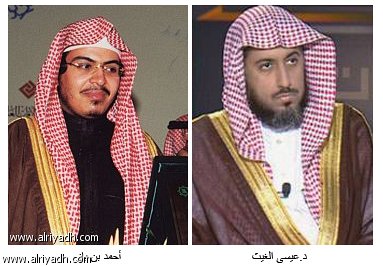
Since 2002 everyone keeps telling me that the ban will be lifted by the end of this year. The end of this year becomes the end of next year and then the year after that and somewhere along the line I’ve lost hope and resigned myself to dragging a strange man to all my classes, on all my errands and to wait outside the gates of houses I visit. However on April 14th, 2010 it seems that something has changed and I can finally see a thin line of hope on the horizon. Riyadh Newspaper, one of the more conservative papers in Saudi Arabia ran an extensive piece not on whether or not women should be allowed to drive cars but on how that can actually be implemented on the ground. The title was literally “Women driving cars…how do we start its implementation”. They interviewed several influential people including sheikhs, professors of sociology and a retired general. But the real deal was sheikh Al Ghaith, his was one of the first photos in the article and don’t be fooled by how young he looks. He’s actually a PhD holder and is far from your typical camera chasing sheikh. More importantly he has the ears of some of the big decision makers of the country. Currently he is a judge at Riyadh’s district court. It’s even rumored that he has the final say when it comes to the death penalty. I would almost go as far as to say that the whole article was a frame for Al Ghaith to subtlety inform the muttawas that the time has come to compromise on this issue.

The article got a lot of attention and had 1625 comments, on average a comment a minute yesterday!

On a lighter note, my shewolf friend had gone out for a few more joyrides since that night.

35 Comments

Filed under Women campaigns, Women driving

Why my heart hurts and my stomach is turned

In Riyadh Newspaper today there was a report on a 65 year old man who suffers from Hepatitis B applying for a marriage health certificate to marry an eleven year old girl. The staff at the hospital were shocked not only by the shamelessness of the man but also of the eagerness of the girl’s parents to finish up the paperwork so they can go ahead with the wedding. So they are knowingly subjecting their daughter to not only a pedophile but also a disease.

Some of the hospital staff apparently strongly disagree with the procedure and want to prevent the marriage but they have no power to. Marriage licenses are  granted to hepatitis sufferers only after the healthy partner is aware and agrees but how can you expect adult consent and awareness from an 11 year old?!

If only there was a law that would put an end to this once and for all.

178 Comments

Filed under Child marriages, Popular