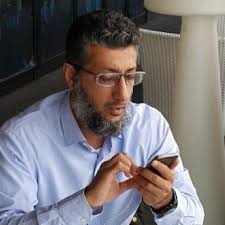
Saudi Heroes was inspired by the original Saudi hero, Dr. Gazi Al Qosaibi. These lists highlight Saudis who take stances or work hard in the unselfish pursuit of the betterment of the Saudi people. In this sentence, you’ll find links to the first Saudi heroes post, the second, and the third.
Dr. Tawfig Al Rabiah

Dr. Al Rabiah, Minister of Commerce and Industry, is famously known as “the minister of the people.” He earned this title by mainly abolishing the usual ceremony that surrounds Saudi ministerial positions. He rarely wears the black and gold cloak that sheikhs traditionally wear as a status symbol. He enters the ministry through the front door instead of using a secret back entrance. He even makes a point of taking the stairs so that both ministry employees and the general public can have access to him longer as he enters and leaves his office. When he first took office in 2011, he did not make the usual unlikely-to-ever-materialize-ten-point-five-years plan announcements. We began to feel his presence through the public closures of restaurants for compromised sanitation and violated food regulations. Then he streamlined consumer complaints and facilitated the public’s follow-up of complaints. He removed the glass windows between the ministry’s bureaucrats and the people they are serving. Overall he’s a man who does his job well which is, unfortunately, unusual in the Saudi public service sector.
Waleed Abulkhair

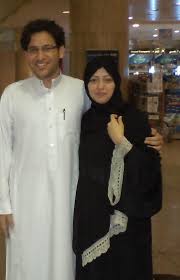
Abulkhair is an independent human rights activist. Many know him as Raif Badawi’s lawyer. He’s also the lawyer who fell in love with one of the strongest Saudi women I know, Samar Badawi. He proposed to her towards the end of the seven months she spent in prison for not obeying her abusive father. He’s a lawyer who’s the first and in many cases the only to defend those who have the government as their plaintiff. He founded an independent human rights organization called the Saudi Arabia Monitor of Human Rights. Unfortunately, since Raif’s arrest, Abulkhair has fared worse. He is the first in Saudi history to be tried and sentenced under the new terrorism law and is currently serving a fifteen years sentence. His charges include undermining the regime, inflaming public opinion, insulting the judiciary, harming public order, founding an unlicensed organization, and violating the anti-cybercrime law.
Dr. Latifah Alshaalan
Al-Shaalan is one of the first thirty women to be appointed to the Shura Council (national consultative assembly). Appointments to the Shura are lucrative and renewable. Understandably this leads many on this board to be diplomatic about their views. That is not the case with Al-Shaalan. She warms my heart with how unlike the majority she will call a spade a spade. Despite being reprimanded for attempting to discuss the women driving ban, she did not shirk from attempting it again. She was also outspoken against a recommendation to raise the childbirth rate to bulk up military recruitments. Another issue she dared to bring up is the revision of the Interior Ministry’s terrorist rehabilitation program. She commended the official number of only 12% returning to terrorism after their release. However, she stated that it should be improved. Above is a tweet she wrote last Women’s Day. It translates to “The road is long and treacherous for Saudi women, but women will continue to work on their rights, change perceptions and move the still waters rather than beat themselves up and cry.”
Dr. Ibrahim Al Modamaigh
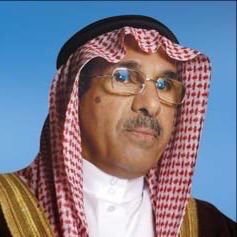
Dr. Almodamaigh is a fatherly figure. Even interrogators cannot help but respect his calm and knowledgeable demeanor. This patience and wisdom also come across on Twitter. When most would have been frustrated, Dr. Almodamaigh respectfully responds to even trolls. He has taken advantage of that platform to educate Saudis about their rights. Some have told me that they cannot form a final opinion on local political topics until they’ve seen Almodamaigh’s position on the issue.
Dr. Almodamaigh is a Harvard doctorate graduate. He did not attend his graduation in protest over Harvard’s position on Israel’s 1982 attack on Lebanon. He has a history of taking similar stands. He is one of the first signatories of the 1990 Civil Rights petition demanding the monarchy allow a parliament elected by the people. He was appointed to the Human Rights Commission but soon resigned due to its glaring lack of government independence. Currently, he has his law firm. He leads the defense of human rights activists charged with establishing government independent human rights groups such as the members of the Saudi Civil and Political Rights Association (ACPRA). He also defended those prosecuted for criticizing a government body such as the three lawyers who were tried for tweeting about the Ministry of Justice’s incompetence and for retweeting a cartoon on the same matter.
Aziza Al Yousef

AlYousef is one of the most generous people in Saudi Arabia. She is generous with her time, money and hospitality. She has hosted lectures on everything from the Saudi economy’s current situation and future prospects to the life of literary figure Abid Khazandar. She has taken part in all the women driving campaigns since 2011 not only by driving and getting caught but also by supporting other women who do. Her catering business always prioritized employing Saudi women years before it was a national agenda. She is bravely outspoken on fighting terrorism through Arab nationalism. She is the only Saudi woman to attend eight sessions of the ACPRA trials. If I were to sum her up in one sentence, I would say she is one of those rare human beings who lead by example rather than talk. When Jamjoom on CNN asked her why she took part in driving movements, she replied that we are sick and tired of waiting to be given our rights, it’s about time we take them.
Essam Al-Zamel

Al-Zamel is known as a Saudi Twitter “big fish.” With thousands of influential followers in the political and business sectors, his tweets have weight. He is also a fellow blogger. His day job is entrepreneurship with a focus on online startups. However, he’s on this list for his undying championing of taxing “white land.” Only 30% of Saudis own their homes. Everyone else rents. Meanwhile, the rich have a tendency to hoard large undeveloped plots of urban land (white land) as riskless investments. These amassed undeveloped plots lead to land shortages, which in turn drive property prices up. To discourage this practice, Al-Zamel advocated that these plots be taxed. Since 2011, Al-Zamel has been campaigning and raising awareness by taking part in a movie on the topic and through his social media accounts. He has been unrelenting and consistent in a culture with a limited history of political advocacy. Usually, in Saudi Arabia, a person who takes up a cause gives up within a year. Many in Saudi don’t realize that governmental changes in most corners of the world require years of campaigning. Even after the Saudi government announced that it will impose a white land tax, Al-Zamel did not just celebrate and move on. He has since written tirelessly about the implications of how this tax is implemented. He is currently working on educating people about the importance of it being high enough to impact the real estate market and that it be imposed indiscriminately on all.
Dr. Tawfiq al-Saif
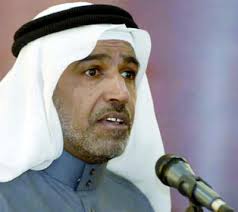
Al-Saif is a researcher and writer with a doctorate in political science. He’s authored books in Arabic and English. He is a Saudi hero because much of what he’s said and done for the past few decades is to alleviate sectarianism in Saudi. Al-Saif is a minority Shiite in a country that is considered the center of Sunni Islam. This is a country where, without fear of reproach, government paid sheikhs can issue statements titled “Shia sect an evil among the sects of the Islamic nation, and the greatest enemy and deceivers of the Sunni people.” He spent his teens and early twenties in Iran, Syria and Britain as part of an opposition movement for Shia rights in Saudi. However, when Saddam Hussein came calling with offers of funds, a radio station and even a plane, Al-Saif’s movement turned him down. They responded that despite their differences with how Saudi is governed, they are patriots first. After the Gulf War, Al-Saif’s movement made peace with the government and returned home without fear of prosecution. Since then, Al-Saif has patiently and consistently raised awareness from within about the plight of the Shia minorities while emphasizing the importance of human rights for all. He wrote and signed major petitions that called for national reforms not specific to Shiites. He even had the poise and forbearance to sit through a debate with a mutawa on whether or not Shias should enjoy the same rights as Sunnis. But my personal favorite moment in his interviews is when he is accused of being sectarian himself. With his decades of anti-sectarian stances, he could have vehemently denied it. Instead, he responds that like everyone else he struggles to rid himself of these intolerances.
Aqal Al-Bahili

Al-Bahili is a writer and activist whose history goes back decades. His wife, Nora Al-Ghanim writes about him in a book on the 1990 women driving protest:
“After hardly a year of working as an elementary school teacher, my family moved to Riyadh. There, I was married off to a former political prisoner, Aqil Al Bahili. I had always wanted to marry a man who appreciated women and respected their rights, and fortunately my wish came true as my husband was a staunch advocate of women’s rights. None of my family members, nor my relatives had any history of, or connections to social and political work, with the exception of my husband. He was imprisoned for political reasons during King Faisal’s era. He was in prison for five years before he was released. Soon after his release we were married…I will never forget my husband’s role throughout the turmoil and how he stood by me. I would never even have taken part if it were not for my knowledge that he would be there for me.”
With the recent clamp down on any form of criticism or activism, Al-Bahili is one of the few who still dares to speak up. His tweets, his interviews and his call-ins on shows are downloaded and shared widely on Whatsapp and other more private forums. He has an uncanny ability to assess the public mood. One of his more bold and comprehensive interviews is an hour-long interview he did six months ago. In it, he makes a statement many within the country would only whisper in private; he says the Saudi people want a mechanism through which they could monitor the government and hold it accountable. He also spoke boldly about the people’s aspirations for a constitution and an elected parliament. At the end of the program, people were allowed to tweet in their questions. One person asked how he could still walk free after publicly saying that we can’t expect the rich to pay taxes on their undeveloped urban land plots when they don’t even pay their electricity bills. Al-Bahili’s response was to simply laugh. Fearless.
Adel Faqih
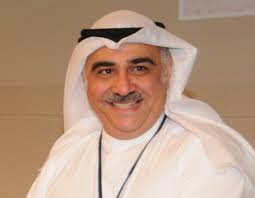
Faqih is another minister worthy of hero status. Faqih is a women rights advocate who has been able to implement and expand the King Abdullah decree of allowing women to work in lingerie shops. Most people think that the biggest obstacle to women working in malls is religious fundamentalism. However, upon implementation, it became obvious that the perception of fundamentalism among Saudi society is exaggerated. In the span between the 2011 decree and 2013, the official number of Saudi women in the private sector grew from 42.4 thousand to 454.3 thousand. Saudi women and society at large proved not too conservative for these jobs. These numbers indicate that the main obstacle was and remains lack of opportunity. Meanwhile, those opposing Faqih are fringe fundamentalists and mostly business owners. Replacing cheap foreign labor with untrained more expensive Saudi women is not a transition that employers welcome. Most foreign labor comes from poverty stricken countries. These workers tend to be more forgiving than Saudis about work hours, health insurance and salary. So no wonder these business owners would not be too keen on the change.
Sami Al-Hussayen

Al-Hussayen was a computer science Ph.D candidate at the University of Idaho when 9/11 happened. He was later caught up in the Patriot Act witch-hunt and was eventually deported. This scenario could have gotten much worse in many ways. The false accusations and the interruption of his hard earned studies could have led him astray. Instead, he came home and currently teaches computer science at a technical college in Riyadh. Al-Hussayen is a Saudi hero because rather than wallowing in bitterness he co-founded a non-profit educational platform, Rwaq. He created the platform with another Saudi hero, Fouad Al-Farhan. On this platform, they cut through all the financial and bureaucratic obstacles of further education. They also enable people from all over the Arab world to generously share their expertise. All this at no cost to no one but themselves.
Hissa Hilal
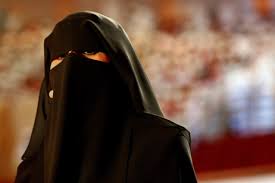
Hilal is a poetess with a long history of publishing under the pseudonym, Remia. Her talent was resilient enough to withstand the patriarch Bedouin society she grew up in. In her teens, her notebooks were taken away and set on fire. This did not deter her. She made use of any mode of communication available to her at the time including landlines and fax to send her poetry to magazines and newspapers. Eventually, her talent shined through and got her own regular two-page spread in a weekly Kuwaiti magazine. She moved on from there to be the first Saudi woman editor of the poetry and prose page in Al Hayat newspaper. Although, all of this merits her to be a Saudi hero, she’s on this list for another accomplishment. In 2010, she participated in the fourth season of a popular competition called The Million’s Poet. She took third place based on the viewer’s votes. However, if the show were based solely on the judges votes, she would have won. Regardless of her placement, she used this platform to address misogyny and extremism. While her fellow contestants wrote poems about their love conquests, Hilal bravely wrote hers about the psychological torture of polygamy and the evilness of fatwas. She was inevitably attacked and slandered in the media. In response, she used the last poem of the program to state that her intellectual freedom is like a bird that no one can catch.


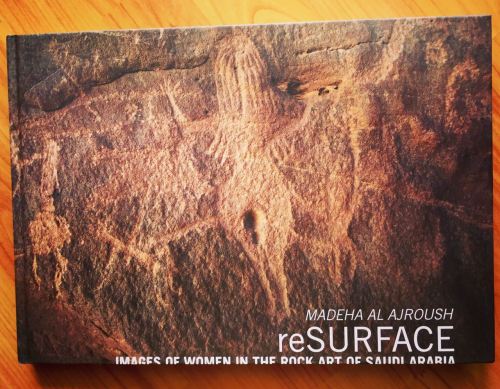
 She has always been consistent in that all human beings deserve respect and the freedom to live with dignity. Al-Ajroush worked with Prof. Hessa Al Shiekh to initiate what today is known as the